
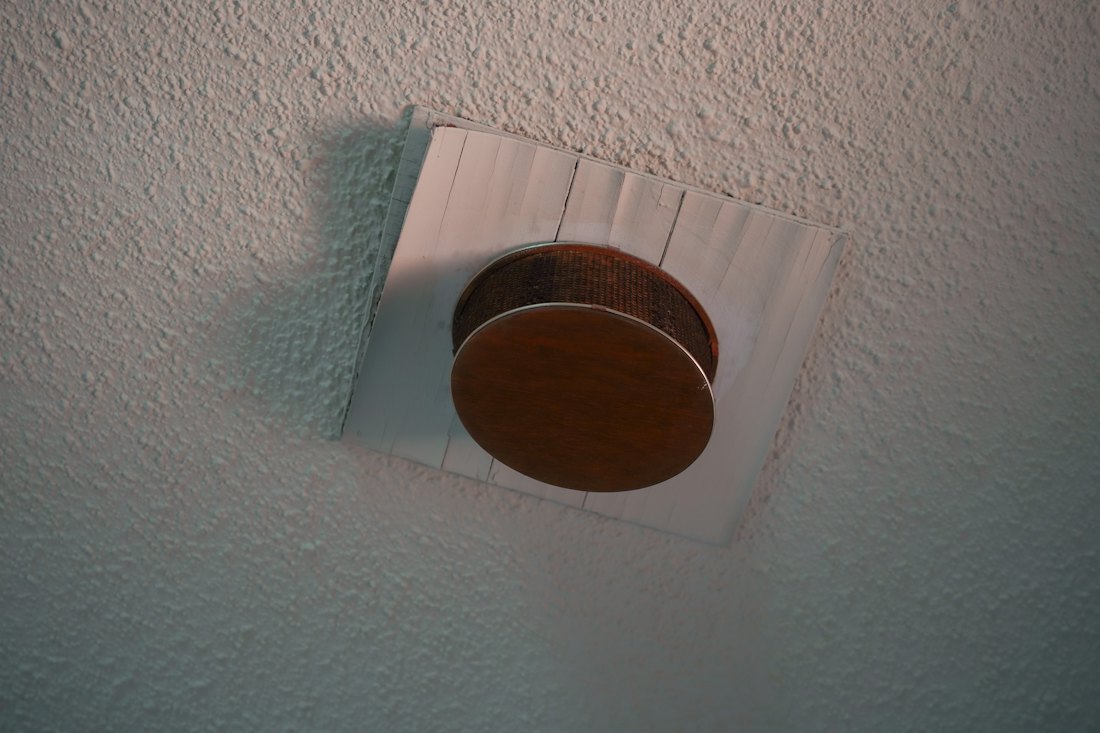
A smoke alarm can look perfectly fine on the ceiling and still be past its useful life. The sensor inside slowly degrades, dust builds up in the chamber, and the electronics age. Pressing the test button checks the horn and the circuit, but it does not always tell you how well the alarm would actually detect smoke. That is why replacement dates matter.
The ten-year guideline
Most smoke alarm manufacturers recommend replacing alarms ten years after the date of manufacture. Fire and Rescue NSW gives the same advice. The clock starts when the alarm was made, not when it was installed, so an alarm that sat in a cupboard for a couple of years before going up already has less life left.
How to find the date
Twist or unclip the alarm from its base, or look at the side, and you will usually find a label with a manufacture date or an expiry date. Some newer models print a replace-by date clearly on the outside. If you find:
- A date more than ten years ago, plan to replace it.
- No date at all, it is most likely very old.
- A label so yellowed it cannot be read, the alarm has almost certainly done its time.
Before removing a hard wired alarm, be aware that it is connected to mains power. Most clip off a base and disconnect with a plug, but if anything looks loose, burnt or unfamiliar, leave it and get an electrician to look.
Warning signs before ten years
Some alarms fail early. Replace an alarm if you notice any of the following:
- It still chirps after a fresh battery has gone in.
- The test button produces a weak, crackly or no sound.
- It goes off randomly with no smoke, steam or dust around.
- The casing is cracked, discoloured or has been painted over.
- It has been through a house fire, a flood or heavy building dust.
- In an interconnected system, it no longer sets off the others.
Chirping is not always the battery
A short chirp every minute or so is usually a low battery warning. On many hard wired alarms it can also mean the backup battery is flat, the alarm has reached end of life, or there is a fault. Some sealed lithium alarms chirp to say the entire unit needs replacing, because the battery cannot be changed. Check the manual or the label for what the chirp pattern means on your model.
Replace all at once or one by one
If your alarms are interconnected, replacing them all together is usually the better choice. Different brands and generations often do not link reliably, and mismatched systems can leave gaps without you knowing. Even for standalone alarms, if they were all installed at the same time, they will all reach end of life together. Doing the whole house in one visit is simpler and keeps everything on the same timeline.
Upgrading while you replace
Replacement time is a good chance to improve your setup. You might:
- Switch from ionisation to photoelectric alarms, which fire services recommend for homes.
- Move from battery alarms to hard wired alarms with battery backup.
- Add interconnection so every alarm sounds together.
- Add alarms in bedrooms that currently have none.
In older homes around Port Kembla, Berkeley and Oak Flats, we often find a single ageing alarm in the hallway. It is a quick improvement to bring those homes up to a safer standard.
A good habit
When new alarms go in, write the replacement year on a sticker inside the meter box or in your home records. Then you will not need to climb a ladder to wonder about it again for a decade.
Book a replacement
Kalani replaces battery, hard wired and interconnected smoke alarms across Shellharbour, Wollongong and Kiama. If the job turns up a missing safety switch or a tired switchboard, he will let you know in plain language so you can decide what to do.
Call or text 0424 400 346. A photo of the label on one of your alarms is a great place to start.
Reach out to us
Tell us what you need and we will get back to you quickly. If it cannot wait, call or text 0424 400 346 now.
- Phone0424 400 346
- Email[email protected]
- HoursOpen 24 hours for emergency call outs. Planned work booked at a time that suits you.